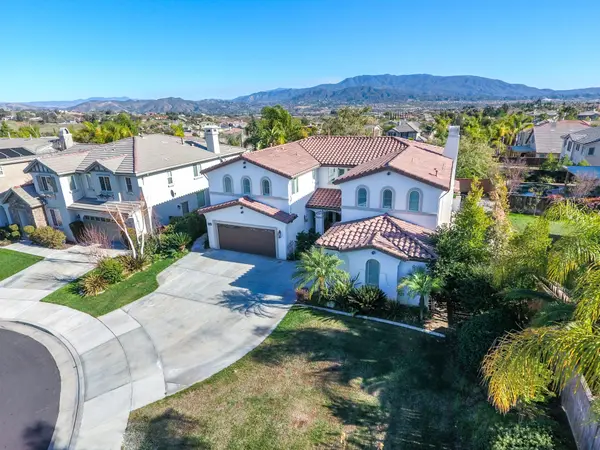
Temecula Home Closing Cost Credit or Lower Price?

The real decision is whether you need cash at closing or a lower payment over time. Before you write the offer, ask your lender to run both versions, a credit and a lower price, using your actual Loan Estimate. Then request whichever one wins on your numbers and your expected time in the home.
Should you ask for closing cost credits on a Temecula home?
Yes, ask when your lender confirms the credit fits your loan program, because a seller credit can reduce the cash you need at closing or fund an approved rate buydown on a Temecula home. The purchase contract and your loan rules decide what the credit can actually pay for, and any unused portion generally can't be turned into cash for you. If you plan to stay a long time, a lower price can beat a credit, so compare both on your own numbers.
Key Takeaways
- Temecula homes of all types that sold August through October 2026 closed at an average of 99.4% of list price, and 48% sold below list, so a credit request is a realistic ask.
- Months of supply in Temecula rose to 4.1 in that window from 3.0 a year earlier, which gives buyers more negotiating room than they had last year.
- A seller credit is a contract term that your lender must approve, and it can't exceed your actual eligible costs.
- Conventional, FHA, VA, and USDA loans each cap seller contributions differently, so confirm the current limit with your lender before you write the offer.
- A lower price shrinks your loan, while a credit shrinks your cash to close or buys down your rate, so the better choice depends on how long you'll keep the loan.
Will a seller agree to a closing cost credit on a Temecula home?
Often, yes. A credit request is reasonable on many Temecula home purchases right now, because the numbers show more room to negotiate than a year ago. That said, a well-priced home that pulls several offers may not flex at all.
Here's what recent local market data shows for Temecula (within city limits), all home types sold August through October 2026:
| Measure | Temecula, sold August–October 2026 |
|---|---|
| Median sale price | $724,996 (a year earlier: $730,000) |
| Average sale price as a share of list price | 99.4% |
| Sold above list / sold below list | 33% / 48% |
| Months of supply | 4.1 (a year earlier: 3.0) |
| Listings with a price cut | 37%, average cut 3.3% |
| Median days from listing to going under contract | 16 |
Read that carefully. Nearly half of Temecula sales closed below list, and more than a third of listings took a price cut. Those are signs sellers are willing to deal. But 33% still sold above list and 22% went under contract within two weeks, so the best-priced homes still move quickly.
There are also 456 homes for sale now in Temecula, with 123 new listings in the last 30 days. More choices usually mean more leverage for you on a home that has been sitting. These are area-level figures, though. Your specific home's condition, street, and days on market matter more than the citywide median.
If you're on the other side of the table, my breakdown of the cost categories sellers face in Temecula explains why a credit request deserves a careful look rather than a knee-jerk no.
How does a seller credit work on a Temecula home purchase?
A seller credit is a negotiated term in your purchase agreement where the seller pays or credits part of your eligible costs at closing. It isn't automatic, and it only works if your lender approves it and the title company can document it the same way everywhere.
The credit should appear consistently in the contract, your lender's disclosures, the escrow instructions, and the final closing documents. Any mismatch can delay closing.
Who decides whether the credit is allowed?
Your lender decides. The lender reviews the contract, appraisal, loan type, occupancy, down payment, and estimated costs. A credit can be perfectly legal under the contract and still be unusable under your loan program. The seller agrees to it, the lender approves it, and the title company carries it out at closing.
What can a seller credit pay for?
Depending on your loan program and lender, eligible uses can include:
- Lender fees
- Title company and escrow charges
- Prepaid interest
- Property tax and insurance escrows
- An approved rate-buydown structure
Your lender, not you and the seller alone, determines which items qualify. Some charges are set by law or by your closing date, while others are negotiable. For example, documentary transfer tax is governed by California and Riverside County rules (the Riverside County Assessor-County Clerk-Recorder publishes its transfer-tax statement and exemption process), while who pays it is typically negotiated in the contract. Check your own contract rather than assuming.
What are the limits by loan type?
Each program caps what interested parties, including sellers, can contribute. These limits change, so confirm the current rule with your lender before relying on any number:
- Conventional: Fannie Mae's interested-party contribution rules vary by occupancy (principal residence or second home versus investment property) and by your loan-to-value ratio. There's no single percentage that fits everyone.
- FHA: Contributions toward allowable closing costs are generally capped at 6% of the sales price, subject to FHA's definitions and your actual allowable costs.
- VA: VA treats "seller concessions," generally limited to 4%, differently from ordinary, reasonable closing costs a seller pays. Your lender has to classify the credit correctly.
- USDA: A 2026 Federal Register notice describes seller concessions to include financing costs, closing costs, escrow accounts, and other seller-paid items, with a 6% limitation.
What if the credit is bigger than my actual costs?
The excess generally can't be paid out to you. Think of the credit as money that can only go to eligible charges, not money back in your pocket. If you negotiate more than your costs can absorb, the parties may need to apply it to other permitted charges or reduce it before closing. That's why I like to see your lender's cost estimate before we pick a number.
Is a closing cost credit better than a lower price on a Temecula home?
A credit is better when your limiting factor is cash right now. A lower price is better when you want the smallest loan and the least interest over time. A lower price reduces your loan amount and long-term interest, while a credit leaves the price alone and reduces your cash to close or funds eligible prepaids or a buydown.
| Question | Seller credit | Lower price |
|---|---|---|
| Cash needed at closing | Reduced, within lender limits | Reduced only if your down payment shrinks with the price |
| Loan amount | Generally unchanged | Smaller |
| Rate buydown | Possible if the lender approves the structure | Not applicable |
| Long-term interest | May drop with a permanent buydown | Drops with the smaller loan |
| Flexibility | Limited to eligible costs | Applies to the whole deal |
How do I run the comparison?
Don't compare headline prices. Ask your lender to build both scenarios from your actual Loan Estimate and compare:
- Cash required at closing
- Lender-approved eligible costs
- Monthly principal-and-interest payment
- The cost of any temporary or permanent rate buydown
- Projected interest over the time you expect to hold the loan
- The break-even point between the credit and the lower-price option
If you expect to sell or refinance in a few years, a credit that lowers your upfront cash often wins. If this is your long-term home, the smaller loan from a lower price may pull ahead. Sometimes my best advice is to take the credit, and sometimes it's to push on price. It depends on your goals, finances, and timing.
Can a credit buy down my rate?
Sometimes. A temporary or permanent buydown isn't interchangeable with unrestricted cash. Your lender must approve the structure, calculate your payment and qualifying income correctly, and keep the contribution within your loan program's limits. Ask for a written scenario before you count on it.
How do I ask for a credit the right way?
- Get your lender's scenarios first. This is a big reason to get fully pre-approved before you tour, so you know your real budget and what credit your loan can absorb.
- Request it before the contract is final. I can propose a fixed dollar credit, a percentage where your program allows it, or a specified rate-buydown contribution.
- Confirm lender approval before you rely on the credit.
- Verify consistency. The credit should match across the contract, the lender disclosures, the escrow instructions, and the final closing documents from the title company.
Your actual credit amount depends on the home, the seller's situation, and your loan. That's the kind of strategy I work out with buyers before we ever write an offer on a Temecula home. The same approach applies whether you're buying in Temecula, Murrieta, Menifee, or Lake Elsinore.
Want to see how other buyers feel about working with me? Read my reviews on Google and Zillow.
FAQ
Can I ask the seller for closing-cost credits on a Temecula home?
Yes, you can ask in your offer. The seller doesn't have to agree, and your lender must approve the amount and structure. I recommend checking your loan program's limit first so the request doesn't create a problem later.
How much seller credit can I get with an FHA loan in California?
FHA rules generally allow interested-party contributions toward allowable closing costs of up to 6% of the sales price, limited to your actual allowable costs. Confirm the current provision with your lender before you write the offer, since it depends on how FHA defines the contribution.
Can a seller credit pay for a mortgage-rate buydown?
It can, if your lender approves the buydown structure and the contribution stays within your loan program's limits. The lender must calculate your payment and qualifying income correctly. Ask for the buydown scenario in writing before you count on it.
What happens if the seller credit is more than my actual closing costs?
The excess generally can't be paid to you as cash. The parties may need to apply it to other permitted charges or reduce the credit before closing. Your lender's cost estimate helps us set the right amount up front.
Who decides whether a seller credit is allowed, the seller, lender, or escrow?
The seller agrees to it in the contract, but your lender decides whether it's usable under your loan program. The title company then carries it out at closing and makes sure the documents match. All three have to line up for the credit to work.
Asking for a credit makes sense when your numbers support it, and the numbers should come from your lender, not a guess. I'll help you compare a credit against a lower price using your own Loan Estimate, then build the offer around the winner. Schedule your complimentary consultation and we'll run the comparison together.
Equal Housing Opportunity. Gabriela Cirby is licensed in California (Lic 0915458, Real Broker Lic 02022092) and regulated by the California Department of Real Estate. This article is general information, not legal, tax, or financial advice. Confirm your own numbers with your title company, tax advisor, or lender. Consent not required to make a purchase. Reply STOP to opt-out of texts or HELP for assistance.
Categories
Recent Posts